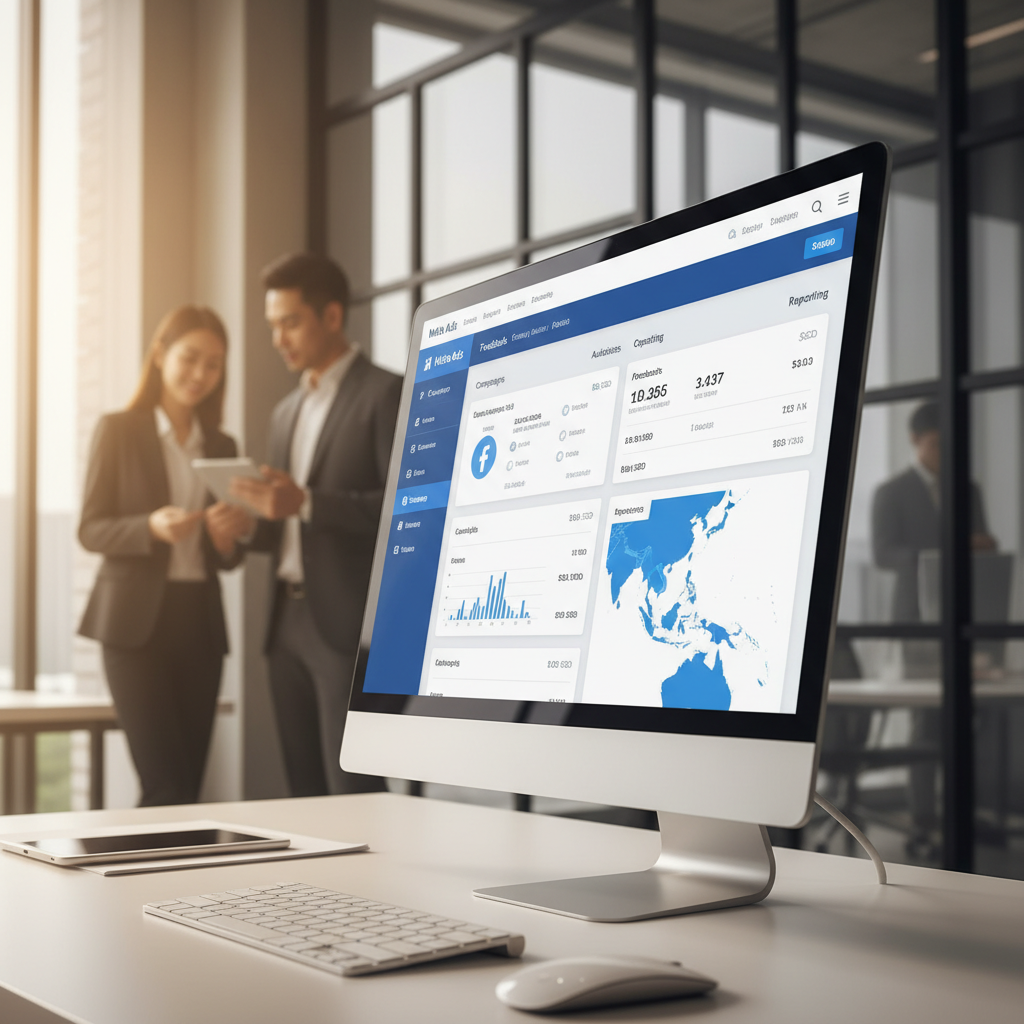
Most SMEs that have tried Facebook ads have the same story. They boosted a post, spent $200, got a hundred likes and three comments, and walked away convinced that Meta advertising doesn't work for them.
That experience is nearly universal. It is also almost entirely avoidable.
The problem is not the platform. Meta Ads reach over 3 million users in Singapore, a penetration rate that makes it one of the most effective paid channels available to any business. The problem is that boosting posts and running actual Facebook advertising campaigns are two completely different things, and most SMEs never make the jump from one to the other.
This guide walks through how to run Meta Ads properly: from setup and campaign objectives to audiences, creatives, budgets, and the metrics that actually tell you whether your money is working.
Why Most SMEs Fail at Meta Ads (and It's Not the Platform)
Boosting a post is easy. You pick a post, set a budget, choose a rough audience, and hit publish. Meta optimises for engagement: likes, comments, shares, reactions. This feels like advertising. It is not.
Boosting is an engagement product. It gets your content seen. It does not get you inquiries, bookings, website visits, or sales, at least not reliably and not at a cost that makes sense for most businesses.
Real Meta advertising is built in Ads Manager. You choose a campaign objective that maps to a business outcome. You build audiences with precision. You control creatives at the ad set level. You track conversions with a Pixel. The algorithm optimises for what you actually want, not for cheap engagement.
The shift from boosting to Ads Manager feels intimidating. It does not need to be. Start with the right foundation, and the rest follows.

Three Things to Set Up Before Your First Campaign
1. Business Manager, not a personal ad account.
Your ad account should sit inside Meta Business Suite (formerly Business Manager). Running ads from a personal account creates access problems, limits your tools, and makes it nearly impossible to hand campaigns over to an agency or employee later. Set up Business Manager first at business.facebook.com. Connect your Facebook Page, Instagram account, and ad account.
2. Meta Pixel on your website.
The Pixel is a piece of code that sits on your website and reports back to Meta what visitors do after they click your ad. Did they visit your contact page? Submit a form? Make a purchase? Without the Pixel, you cannot optimise for conversions, build website retargeting audiences, or create lookalike audiences from your customers. Install it before you run a single campaign. On WordPress or Shopify, there are native integrations. On custom sites, paste the base code into the site's <head> tag and set up event tracking for the actions that matter.
3. A clear campaign objective.
Every Meta campaign starts with choosing an objective. Your objective tells the algorithm what outcome to optimise for. Choose the wrong one, and Meta will deliver your budget to the people most likely to perform the wrong action.
Campaign Objectives: Choosing the Right One
Meta currently groups objectives into six categories: Awareness, Traffic, Engagement, Leads, App Promotion, and Sales. For most SMEs, the relevant ones are:
- Leads: use this when you want form submissions, either via Meta's native Lead Ads (forms that open inside Facebook/Instagram, no website required) or via a landing page. Best for service businesses: clinics, renovation companies, tuition centres, gyms, financial services.
- Sales: use this when you have a product to sell online and your Pixel is tracking purchase events. Best for eCommerce.
- Traffic: use this when you want people to visit a specific page: a blog post, a product launch, an event listing. Only use it if you have a reason to drive clicks without needing a conversion action tracked. It is overused by SMEs who think Traffic means results.
- Engagement: use this for content promotion or building social proof on a new page. Not for lead generation.
The rule of thumb: if you want leads or sales, pick the objective that says so. Do not use Traffic hoping it converts.
Audience Targeting: Cold, Warm, and Hot
Good Meta campaigns are not single campaigns. They are structured in layers that reflect where your audience is in their relationship with your business.
Cold audiences are people who have never heard of you. You reach them through interest targeting (people interested in "interior design" or "fitness supplements"), demographic targeting (age, location, job title), or Meta's Advantage+ audience, their AI-driven broad targeting option that has become increasingly competitive for cost efficiency. Cold campaigns are for new customer acquisition.
Warm audiences are people who have interacted with your business without converting. Website visitors (tracked by the Pixel), people who engaged with your Instagram or Facebook content in the last 30–90 days, and video viewers. Retargeting these people is typically 3–5x more cost-efficient than cold targeting because they already know who you are.
Hot audiences are your existing customers and the lookalikes you build from them. Upload your customer email list, create a lookalike audience of 1–2% similarity, and you are targeting people who statistically resemble your best customers. This is one of Meta's most powerful tools and one of the most underused by SMEs.
A note specific to the Singapore market: audience sizes here are small by global standards. A narrowly targeted interest audience might be 50,000 people. Run too many ad sets against that same pool and you get audience overlap, inflated CPMs, and poor results. For smaller budgets, broad targeting with creative that self-qualifies (e.g., copy that says "for homeowners planning a renovation in the next 6 months") often outperforms precise interest stacking.
Creatives That Convert: What Actually Works
The creative is the ad. Everything else is infrastructure. If your creative does not stop the scroll, the rest of your setup does not matter.
The first two seconds of video are the ad. After that, you are fighting for retention. Open with something unexpected, a bold visual, a direct statement of a problem your audience has, or an immediate demonstration. Do not open with a logo or a tagline.
Static ads work well for clear, benefit-driven messages. The formula: bold headline that states one clear value, supporting line that handles the obvious objection, and a single CTA. Keep it uncluttered. One message per ad.
UGC-style creative (content that looks like a real customer review, a behind-the-scenes video, or an authentic testimonial) typically outperforms polished agency production for SMEs. It feels native to the feed. Local context helps: real locations, familiar faces, situations your audience recognises.
For copy structure: primary text (the first 125 characters matter most before the "See more" cut), headline (the bold line under the image or video), and description. Test different combinations. What works on Facebook often differs from what works on Instagram Stories or Reels.
Launch with three to five creative variants. Let Meta's algorithm find the winner. Do not obsess over the first 48 hours of data.
Budget and Bidding: How Much to Spend and When to Scale
The minimum viable budget for a single ad set is around S$15–30 per day. Below that, Meta's algorithm does not receive enough conversion data to exit the learning phase, which typically requires 50 conversion events. Running a S$5/day campaign and wondering why it is not delivering quality leads is one of the most common mistakes.
For most SMEs starting out, a total monthly budget of S$1,000–2,000 gives you enough room to run two to three ad sets, test a handful of creatives, and generate meaningful data. Below S$1,000/month, results are inconsistent and learning is slow.
When to scale: when your cost per result is stable and below your target cost per acquisition, increase budget by no more than 20% every three days. Doubling your budget overnight breaks the algorithm's learning phase and typically causes CPAs to spike before recovering.
Advantage Campaign Budget (Meta's automated budget distribution across ad sets) is a reasonable default for smaller accounts. It removes the need to manually allocate budget between ad sets and lets Meta push spend toward what is performing.
The Metrics That Actually Matter
CPM (cost per 1,000 impressions): what you are paying to reach your audience. In Singapore, typical CPMs range from S$8–18 for well-targeted campaigns. Higher CPM is not automatically bad. If your conversion rate is strong, it often means you are reaching a more valuable audience.
CPC (cost per click): typically S$0.50–2.00 for campaigns with good creative and targeting. Spikes in CPC usually indicate creative fatigue or audience overlap.
CTR (click-through rate): 1–3% is a reasonable benchmark for link clicks. Below 0.5% usually signals a creative problem.
CPA (cost per acquisition/result): the most important metric. What does it cost you to get one lead, one booking, one purchase? Define your target CPA before you launch, and use it as your primary decision metric.
ROAS (return on ad spend): for eCommerce specifically. Revenue generated per dollar spent on ads. A ROAS of 3–4x is a common target for sustainable eCommerce, though this varies significantly by product margins.
Vanity metrics to deprioritise: reach, impressions, post likes. They tell you people saw your ad, not whether your ad did anything useful.
On attribution: Meta reports on a default 7-day click, 1-day view window. Google Analytics will report fewer conversions because it uses last-click attribution. The numbers will never match exactly. Do not panic. Use the gap as signal, not as reason to distrust the platform.
A Simple Meta Ads Funnel for SMEs: A Practical Example
Consider an aesthetic clinic with a monthly ad budget of S$2,000. Here is how a three-layer funnel works in practice.
Top of funnel (cold): S$800/month on a Leads campaign targeting women aged 25–45 in Singapore with broad interests in skincare and beauty. The ad offers a free consultation. The creative is a 15-second video showing a real before/after with a direct headline: "Book your free skin consultation this month."
Middle of funnel (warm): S$700/month retargeting everyone who visited the clinic's website in the last 30 days but did not submit an inquiry form. The ad addresses the likely hesitation: "Not sure if the treatment is right for you? Our doctors answer your questions before you commit."
Bottom of funnel (hot): S$500/month targeting a lookalike of the clinic's existing patient list. These people statistically resemble people who have already booked. The ad leads with a seasonal offer or a loyalty referral incentive.
The three campaigns work together. The cold campaign fills the top. The warm campaign catches people who were interested but needed more time. The hot campaign finds new customers who are likely to convert efficiently.
After collecting leads via Meta, WhatsApp becomes the natural follow-up channel. WhatsApp marketing closes the loop between ad inquiry and booked appointment, a combination that consistently outperforms email follow-up for service businesses.
This funnel is not complex. It is just structured. Most SMEs running Meta Ads are only running one campaign at a time, typically cold, and wondering why the platform underperforms.
Running Meta Ads Alongside Google Ads
Meta and Google Ads serve different moments in the buying journey. Google captures demand that already exists: someone searching "aesthetic clinic Singapore" is ready to book. Meta creates demand: it reaches people who are not actively searching but fit your customer profile.
The most effective paid media strategies for SMEs use both. Google Ads for high-intent search traffic, Meta for awareness and retargeting. Each platform reinforces the other.
If you are only running one platform, start with whichever matches your business model. Service businesses with high-intent searches (legal, medical, home renovation) often see faster ROI from Google. Businesses with visual products or impulse-friendly services (F&B, fashion, wellness, events) often see stronger results from Meta first.
For a broader look at how paid and organic social media work together, or how Meta Ads fits into a full-service digital marketing strategy, those posts cover the surrounding context.
What Good Meta Ads Look Like in Practice
A well-structured Meta account for an SME looks like this: two to three active campaigns at any time (cold, warm, hot), two to four ad sets per campaign, three to five creatives per ad set, and a clear optimisation event tied to each campaign objective. Budget reviews happen weekly, not daily. Creative refreshes happen every four to six weeks, or when CTR drops below 0.5%.
This is not complicated. It requires discipline and a clear system more than technical skill.
The businesses that get results from Meta Ads are not the ones with the biggest budgets or the most sophisticated tools. They are the ones running structured campaigns with clear objectives, consistent creative testing, and a bias toward reading the data before making changes.
Run Meta Ads That Are Actually Set Up to Work
If you want Meta Ads that are structured properly and managed by people who understand the market, LOMA runs paid social campaigns for SMEs. No boosted posts. Actual strategy.
We handle campaign architecture, creative direction, audience build, and ongoing optimisation. If your current spend is producing unclear results, the first step is usually a clean audit, not more budget.